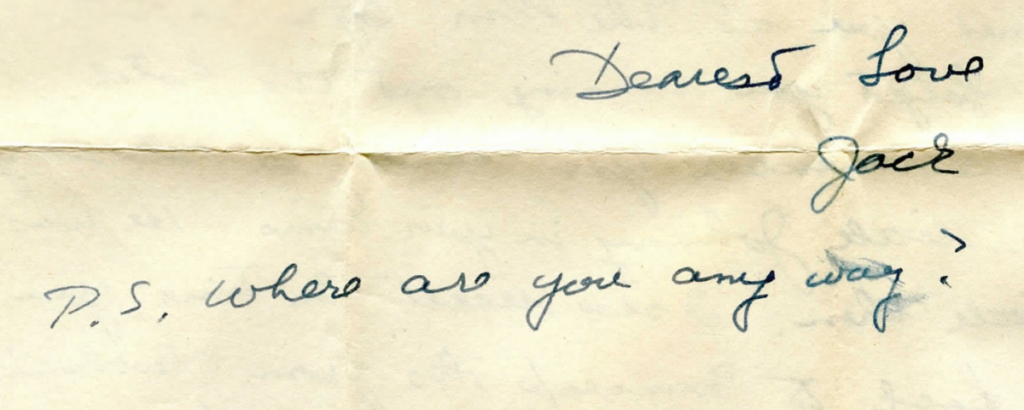
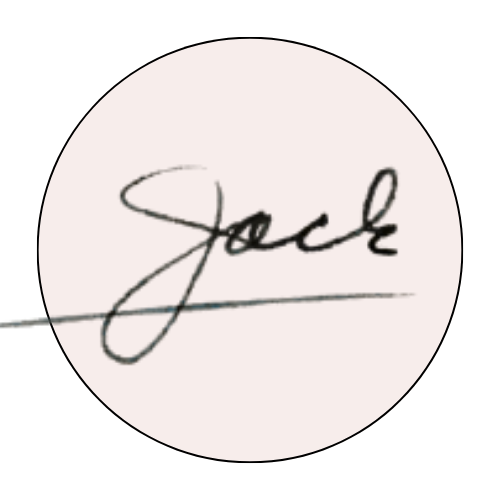
The Numbered Envelopes: April 1945
WWII letters from Jack to Helen
Correspondence is rarely linear. War correspondence, even less so.
“Received your letter no. 6 today, but I don’t know what happened to 3, 4, & 5.”
My grandparents numbered their early letters to one another, an attempt to impose order on a chaotic postal system. Yet, these dispatches often arrived like shuffled cards—#6 before #3, or #14 long after the news it contained had grown cold.
One letter Jack sent in April didn’t reach Helen’s hands until July. By then, the world it described had shifted entirely.
The Redacted Page
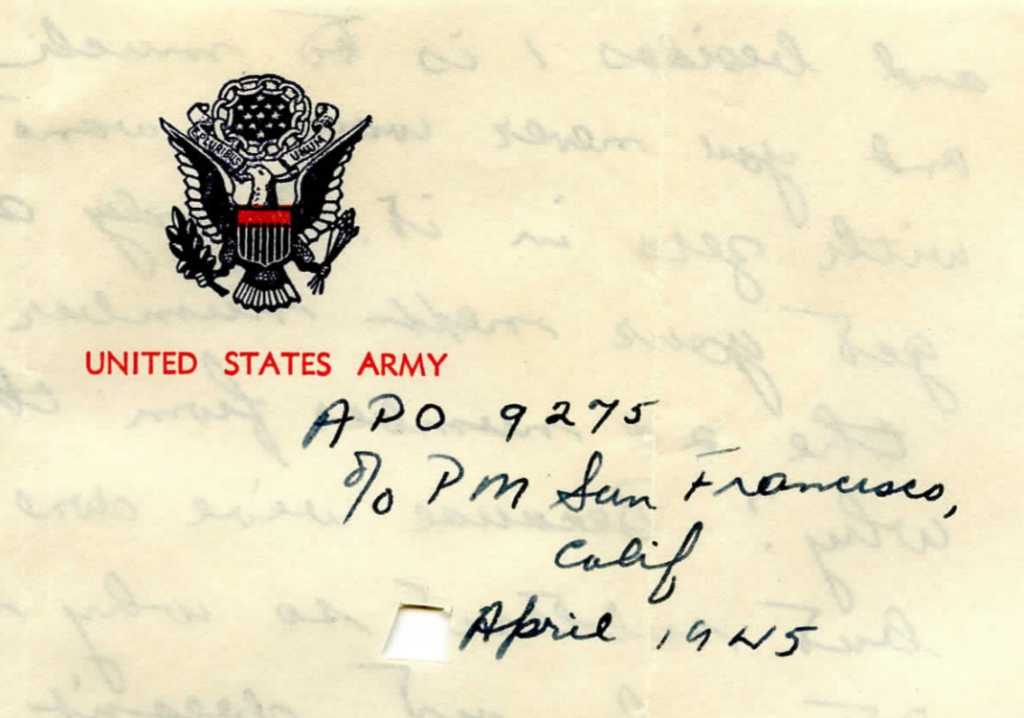
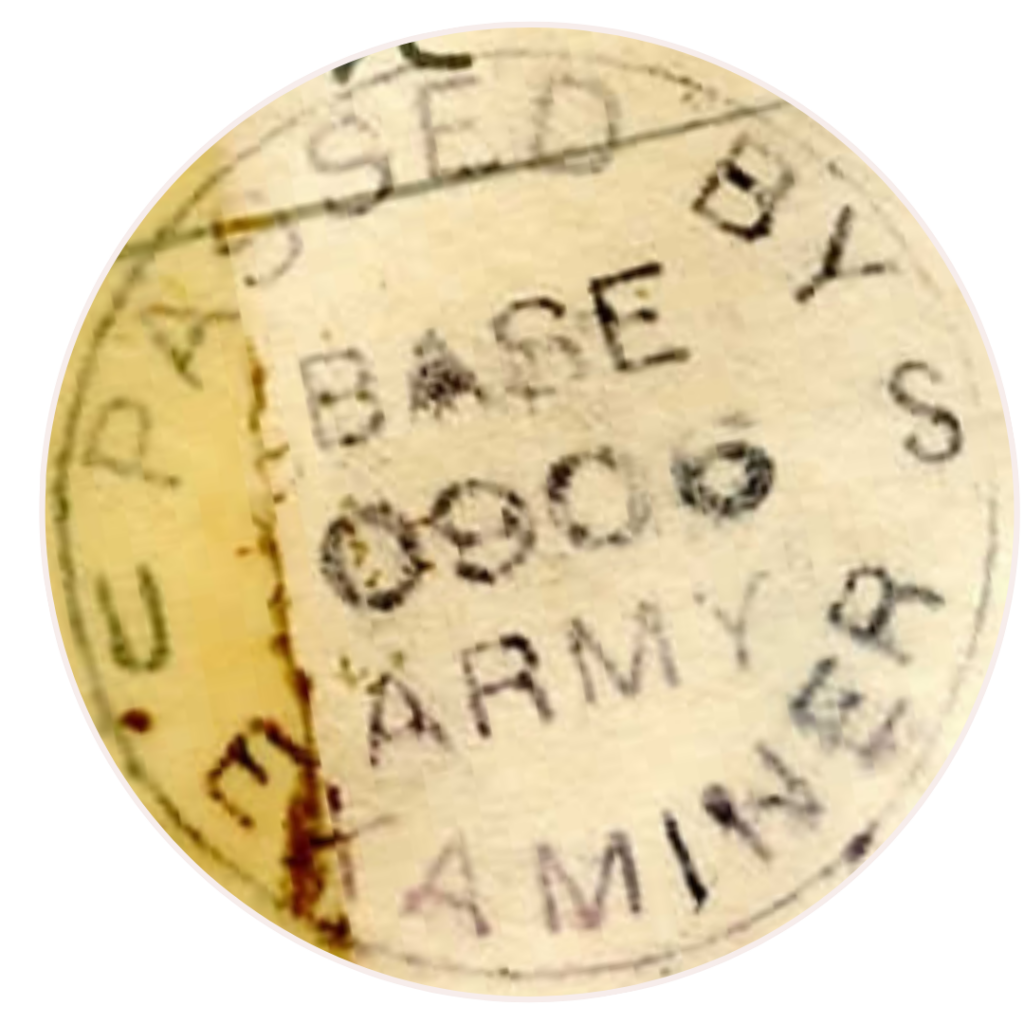
Sorting these out 81 years later is a puzzle of both ink and absence. Sometimes the Army censors used heavy black marks to strike out a forbidden detail; other times, they were more literal, physically cutting a rectangle out of the page. Because Jack typically wrote on both sides of the paper, a single snip to hide a date on the front would often swallow a heartfelt sentence on the back.
It leaves me, the curator, looking through literal holes in the story, trying to piece together what was lost in the “clip.”
A Point of Connection
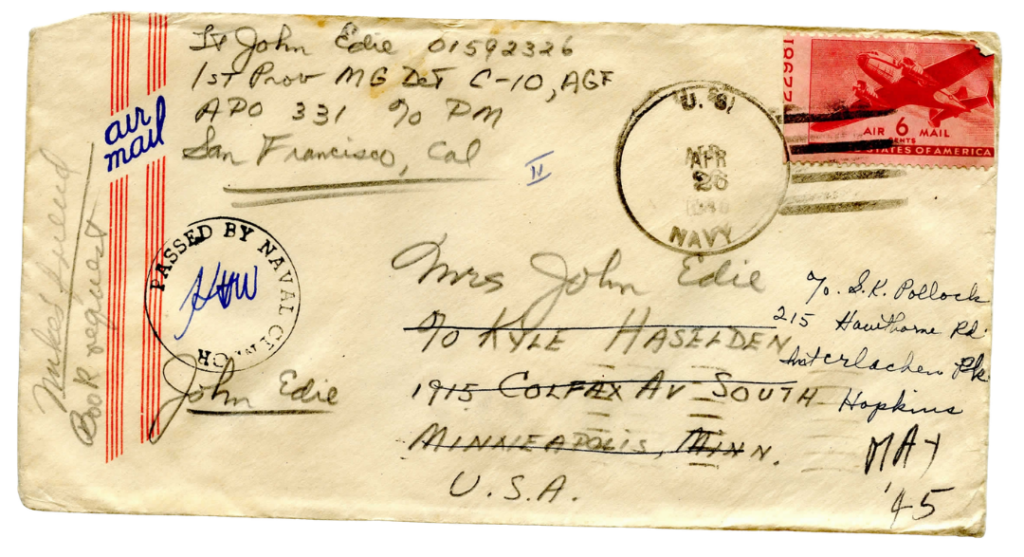
In April 1945, Jack was “somewhere in the Pacific,” but he was equally unsure of Helen’s coordinates. Most of his letters were flying toward Carmel, California, where Helen had been staying with family. From there, they began a relay race—forwarded to Minneapolis, then Hopkins, then on to Lakewood, Ohio—chasing her across the country.
He writes into the abyss, asking questions that won’t be answered for weeks: Did you go to Seattle? Did you visit the Mountains? Have the Davenports moved in yet?
“I wish I knew where you were.”
The Long-Distance Dialogue
What strikes me most is that these weren’t just reports—they were conversations.
Questions about train tickets, bank deposits, or Johnny’s latest milestone were written without knowing when—or if—they’d be answered.
The letters crossed in transit, arrived out of order, or not at all.
And still, they kept writing.